
- Home
- Industry Thought Leaders
- The Importance of Preventative Maintenance
Preventative Maintenance Matters
Within the healthcare industry, there are many crucial activities that come to front-of-mind when thinking about all necessary efforts that keep your operations running smoothly. Preventative maintenance, however, is generally not among the first things that come to mind. Often when working in a fast-paced environment, conflicting priorities mean proper care and maintenance can fall by the wayside.
In this paper, you will learn what preventative maintenance truly means, why it‘s beneficial for your organization, and how your facility‘s maintenance costs are not simple expenditures, but are truly investments that will pay off in the long run.
What Does “Preventative Maintenance” Really Mean?
Preventative maintenance is a broad term, but in this paper it is used to describe a proactive approach for managing the lifecycle of each individual system, hence why following the system provider or manufacturer’s recommendations is paramount.
Within a hospital, there are numerous systems that should receive regular preventative maintenance for long-term success, including but not limited to general building infrastructure (externally and internally), environmental systems, and plumbing and irrigation systems1.
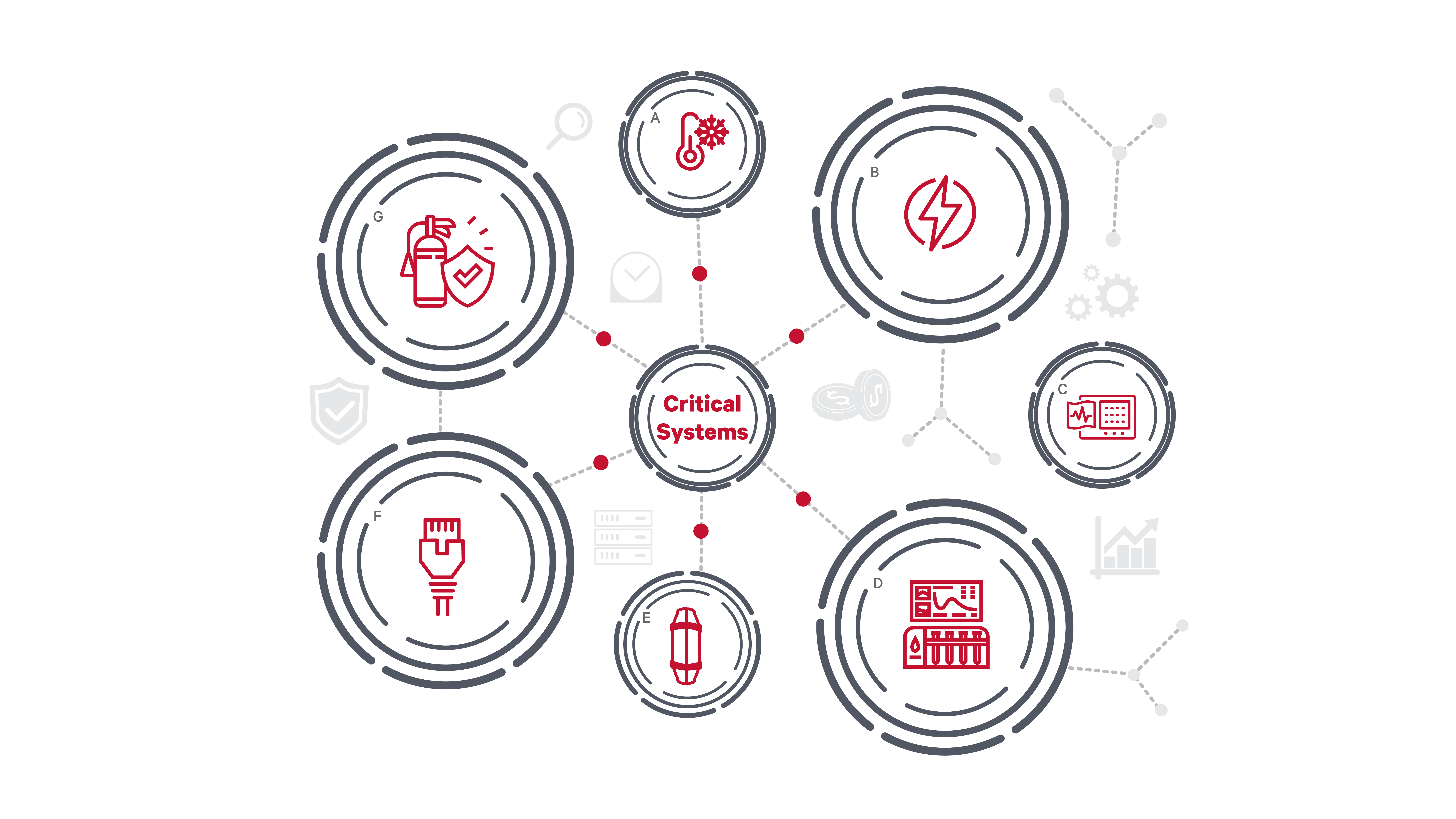
Below are some of the most critical systems which
realize extended longevity with proper preventive
maintenance attention2:
A. HVAC Systems
B. Electrical Systems
C. Medical Devices
D. Research Equipment
E. Pneumatic Tube Systems
F. Workstations and Communications Equipment
G. Fire Safety Related Systems
Other factors that influence the best maintenance methods are risk considerations, industry practices, and hospital experience3.
With that said, there are four distinctive types of preventative maintenance methods4:
1. Usage-based maintenance – the system utilization determines maintenance interval; therefore, a system that is heavily used will receive preventive maintenance on a shorter interval or more often than an infrequently used system.
2. Calendar/time-based maintenance – maintenance is performed on a regular cadence.
3. Predictive maintenance (PdM) – maintenance is scheduled based on the condition of the equipment and the necessary corrective measures that should be taken in order to prevent a failure.
4. Prescriptive maintenance – this maintenance involves advanced analytics to determine and analyze all possible options and outcomes in an effort to mitigate risk.
Reactive or Deferred Maintenance Leads to Costly Consequences
The opposite approach to preventative maintenance would be reactive maintenance, where systems are only maintained when an issue arises. Reactive or deferred maintenance can actually have catastrophic and costly outcomes.
According to Compliant Healthcare Technologies (CHT), “deferred maintenance compounds at a rate of 7% annually,” proving that ignoring known problem areas only makes matters worse5.
The interplay between systems is also an important factor to consider, as improper care of one system could impact a seemingly unrelated system. For example, most wouldn’t initially associate an HVAC system with other sensitive equipment, such as an MRI; however, MRIs can only operate properly under specific temperatures and humidity6. Therefore, an HVAC failure could impact patient safety and hospital operations on a grander scale.
Preventative Maintenance Leads to High-Efficiency Operations
Preventative maintenance is vital to maintain high-efficiency operations. Unfortunately, it’s often overlooked to satisfy short-term needs. The upsides, not surprisingly, outweigh the initial costs and those benefits are as follows:
1. Proper upkeep prevents the possibility of downtime or catastrophic failure.
Hospitals depend on a wide variety of crucial mechanical components. If just one component experiences a failure resulting in downtime, the whole hospital’s operations are affected. This can be costly in terms of revenue, reputation, and patient safety. For example, HVAC issues alone can shut down a hospital facility for hours and can cost tens of thousands for every hour it remains unoperational7. Not to mention that hospital staff ends up bearing most of the burden when something is not functioning as it should. Why risk a failure when it can very easily be prevented through proper care? Implementing preventative maintenance can help safeguard your important systems and ensure they are less prone to downtimes8.
2. Well-maintained systems ensure productivity.
Overall productivity can also have significant impacts on your hospital’s operation. Preventative maintenance can ensure the system runs at peak performance and can handle all the regular wear and tear from usage.
3. Maintenance can extend the useful life of your equipment.
Proper care protects your investment and ensures your system gets the proper care to reach its expected end-of-life.
4. Preventative maintenance can reduce overall maintenance costs.
While preventative maintenance has some upfront costs, in the long run, a facility that performs proper maintenance techniques can save far more than a facility that practices reactive maintenance.
a) Improper care could lead to extensive and costly repair in order to get a failed component or components up and running
b) Additionally, regular preventative maintenance helps fight parts availability woes. With the current supply chain issues, the availability of parts is never guaranteed, especially with an aging system and rapidly advancing technology. Regular preventative maintenance allows for the opportunity to address any out-of-date components before they fail. Suppose your system has not been properly kept and experiences an issue. In that case, the components to fix the issue may be outdated or unavailable, leading to a more costly and potentially more invasive repair as multiple other components might also need to be replaced to rectify an issue.
5. Preventative maintenance futureproofs for expanding operations.
Preventative maintenance is paramount for a system or piece of equipment that allows for future expansion or modernization. A properly maintained system can more easily be upgraded and doesn’t require as much upfront work for both internal and external teams.
6. Ensure equipment is safe for staff and patients by performing regular maintenance.
If improperly cared for, sensitive equipment and heavy machinery could become dangerous to operate or yield inaccurate results that compromise patient care.
7. Be in compliance with Regulatory agencies through proper maintenance procedures.
Regulatory agencies, such as CMS (Centers for Medicaid and Medicare Services), have clear policies centered around the maintenance of critical and non-critical equipment3. If not followed properly, facilities could be fined for violations5.
Knowing the Cost of Preventative Maintenance.

Accounting for all costs is imperative when determining your facility’s proper preventative maintenance plans. However, not all preventative maintenance plans are one-size-fits-all, meaning your facility can decide which approach(es) works best for your unique operations and systems. With proper planning and forethought, the added costs associated with preventative maintenance can become more of an investment. Despite the many benefits of performing timely and appropriate preventative maintenance of critical infrastructure and mechanical systems, it is still important to account for the added costs. Costs to preventative maintenance can come in a variety of fashions, from the obvious monetary costs to the less apparent such as labor and time. Preventative maintenance can also be done either with in-house staff, on a contractual basis with vendor-supplied expertise, or with a hybrid approach. To add yet another level of complexity, approaches can differ among the various systems throughout your facility, meaning appropriate planning is necessary. Considering each approach’s soft and hard costs are also key and can help guide decision-making. For example, deciding to incorporate most preventative maintenance tasks in-house is a shrewd and cost-saving initiative. However, overlooked costs such as additional staff training, overtime hours, and additional on-hand parts and tools, to name a few, could potentially outweigh cost savings and end up costing more in the long run9.
Getting the Most Out of a Preventative Maintenance Plan.
The best way to ensure you receive the most benefit from a preventative maintenance plan is to be consistent. Most vendors have preventative maintenance agreement (PMA) options that ensure your system is well kept, by a specialist in most cases, allowing your in house staff to focus on other critical tasks10.
Additionally, a wide variety of third-party software can help manage multiple agreements and their work orders, which further helps streamline preventative maintenance tasks.
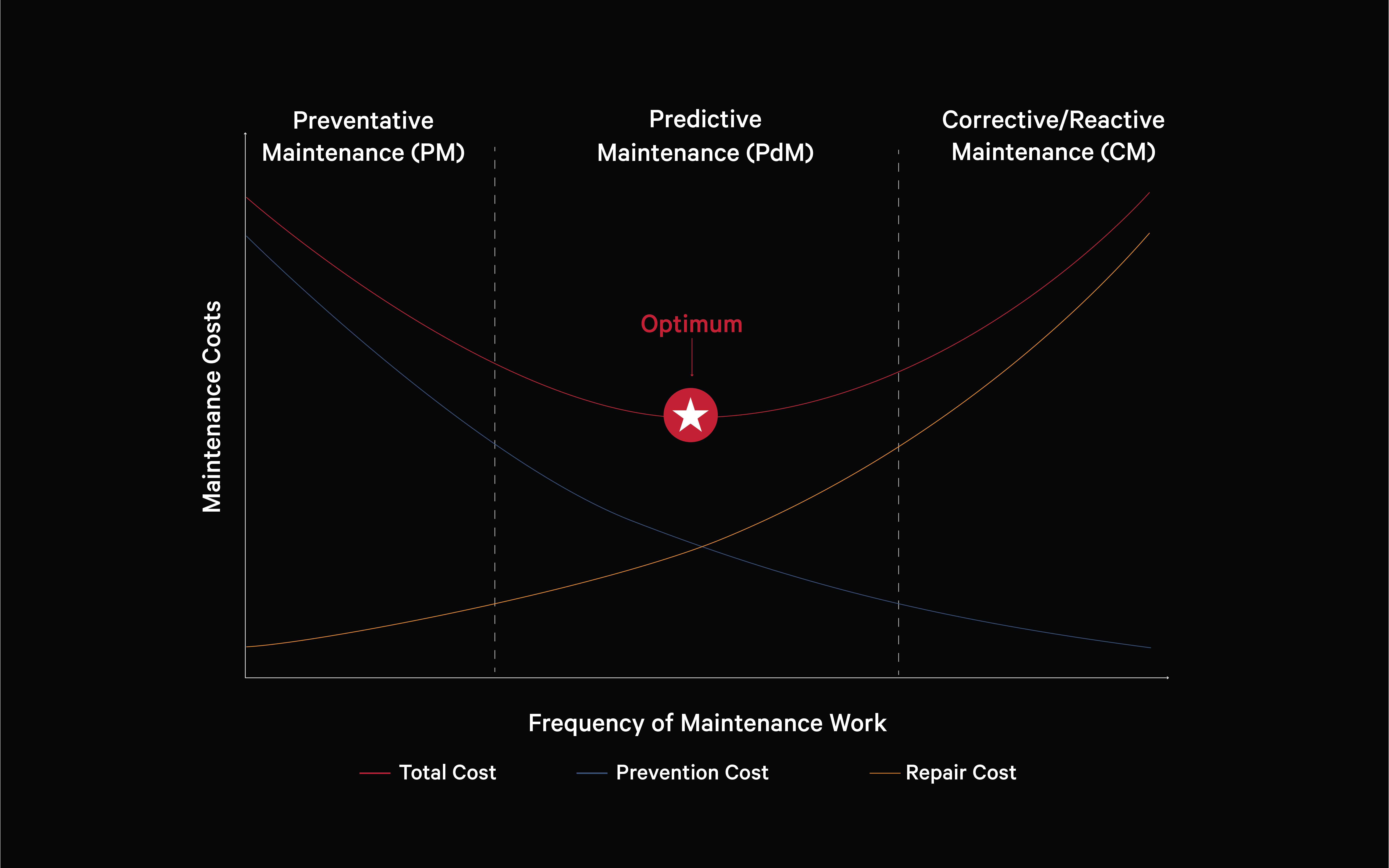
Vendors are also best equipped to know exactly how much preventative maintenance is needed to ensure the benefits outweigh any risks or costs associated with preventative maintenance; therefore, it is critical to follow their advisements. For example, the graph b low shows the “goldilocks zone” where benefits incurred from preventative maintenance outweigh any costs associated9.
Furthermore, it is essential to know and understand the terms of your preventative maintenance agreement and/or warranty guidelines, if applicable. Compromising these terms could mean voiding the agreement altogether, which can be costly should you encounter a catastrophic failure or require extensive repair.
Conclusion
Preventative maintenance is the easiest way to safeguard major capital investments from untimely downtimes or failures. Finding the proper convergence of preventative maintenance and repair costs is the best way to ensure your facility is reaping all the benefits and as little risk as possible.
Sources and Key Information
- Operations and Maintenance Benchmarks for Health Care Facilities Report (ashe.org)
- How to improve hospital building maintenance [2022 best practices (fsiservices.com)
- An estimate of patient incidents caused by medical equipment maintenance omissions. Wang B, Rui T, Balar S,. Biomed Instrum Technol. 2013 Jan-Feb;47(1):84-91. doi: 10.2345/0899-8205-47.1.84. PMID: 23432570
- What is preventive maintenance? (ibm.com)
- 11 (Costly) Dangers of Deferred Maintenance in Facilities (chthealthcare.com)
- HVAC Cleaning and Maintenance in a Hospital/Healthcare Setting (atirestoration.com)
- The Importance of Hospital HVAC Maintenance and Repair (airlogix.co)
- How to Reduce Your Hospital’s Equipment Downtime (Iintermed1.com)
- What is Preventive Maintenance? Types, Benefits, Cost, and Examples (coastapp.com)
- Maintenance Inspection Highlights Threat to Production in Time for Managed Repair (ipco.com)
Talk to our experts
Contact our knowledgeable specialists to discover how our range of automation solutions can boost efficiency, reduce costs and enhance care at your healthcare facility.
Contact us