Today’s Hospital Technologies Continue To Grow In Sophistication
Today’s hospital technologies continue to grow in sophistication, often including multiple components providing a wide range of features. While these large systems provide significant and far-reaching benefits and dramatically improve bottom-line efficiency, they can take months or even years to be fully operational. Furthermore, they may cost a hospital hundreds of thousands to millions of dollars to acquire, install and maintain.
Small, more affordable hospital technologies can also bring significant benefits.
Not all hospital automation solutions require a lengthy approval process and large budget to implement, however. There are many smaller, less expensive solutions available that can drive bottom line efficiency while improving delivery of care.
While these smaller, more affordable solutions are being used by hospitals of all sizes, they can be especially effective in bringing badly needed automation to rural areas and smaller hospital settings where budgets are tight and smaller workforces are tasked with handling a broader range of duties.
Below are five hospital technologies that are surprisingly easy to get up and running, yet can still have a major impact on performance and quality of care:
- Telehealth: Telehealth platforms are helping hospitals of all sizes to conserve valuable physician time enabling them to serve more patients. Studies show that using telehealth in a smaller or more rural hospital environment reduces staffing costs and helps increase local lab and pharmacy revenue. They also help patients save time and money by enabling at-home, virtual appointments without having to travel.
- Cloud-Based Technologies: Applications delivered via the cloud are generally less expensive to implement and require little to no ongoing maintenance. An example of this is EHR or Electronic Health Record platforms. While they have been around for decades, pricing has been out of reach for smaller and rural hospitals with tight budgets. Thanks to the availability of these systems via the cloud, more hospitals can afford to use them. EHR systems now using generative AI can make access to critical data even faster and more accurate.
- Small Frontline Automation: From appointment setting to check-ins and discharges, technology is available to automate processes that normally would be assigned to hospital personnel. Generative AI has further improved the speed and accuracy of these technologies, enabling faster electronic check-ins/outs, and appointment reminders. It is also making it easier for clinicians to take notes on patient status, medications, procedures and follow-ups. They no longer have to hand write notes or go looking for folders in file cabinets. The data is all in one place and easy to access.
- Sensors: Sensor technologies in hospitals are popular because they are highly scalable and can be deployed on an as needed basis. As an example, they can be used as “wearables” to monitor a patient’s heart rate, blood pressure and other vitals and as bed or room sensors to monitor patient motion. Sensors can also be installed in HVAC systems to control temperature by automatically turning the system on and off. Sensors are also being used to conserve lighting through motion detection.
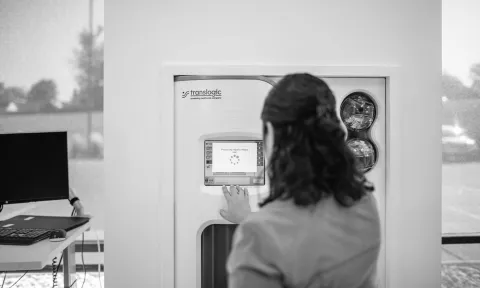
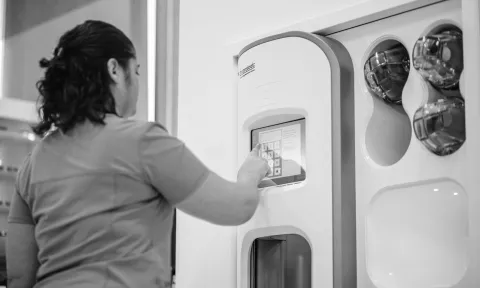
- Small Back-End Automation: Back-end efficiencies can be optimized using technologies that automate tedious, time-consuming processes normally handled by staff. They provide greater accuracy and free up employees to engage in more high value work. One area where smaller automation solutions can improve efficiencies is in medications preparation. Oral solid packagers, for example, fully automate the process of packaging unit or multi doses of patient medications, wrapping them in pouches, making them scan-ready at bedside. Other technologies such as automated pill cutters ensure patient safety while reducing inventory needs.
Hospitals shouldn’t neglect the more immediate ROI of small automation solutions.
Larger hospital technology platforms will always be needed and can be justified in their feature-rich ability to solve a broad set of challenges as well as their interoperability for a more unified operations environment. Many of these platforms are large and costly, however, requiring extensive preparation which takes valuable time and effort and can be disruptive to day-to-day operations.
For many hospitals, especially smaller ones in rural areas, larger systems may not make sense economically or operationally. Leaders should consider the benefits to be gained from smaller, more budget-friendly technologies and applications which can be up and running in weeks, not months. These smaller hospital technologies can yield impressive results in the form of easy implementation, rapid improvement of efficiency, filling staffing gaps, and providing a faster return on investment.